Abstract
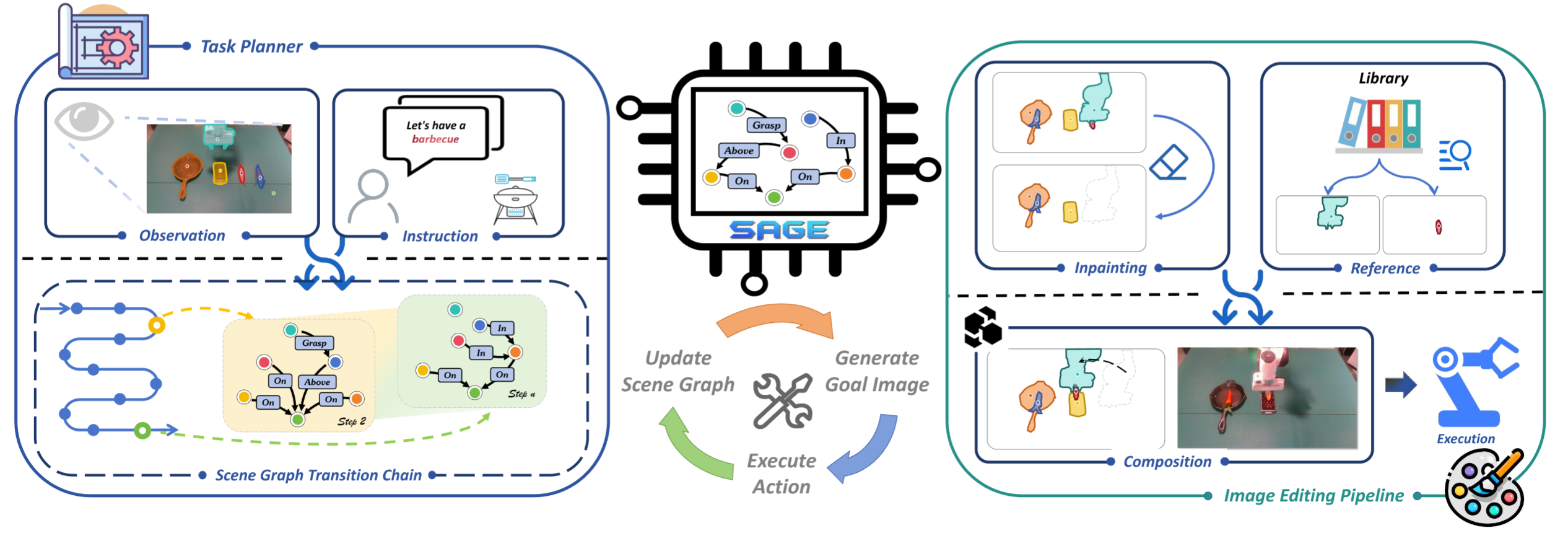
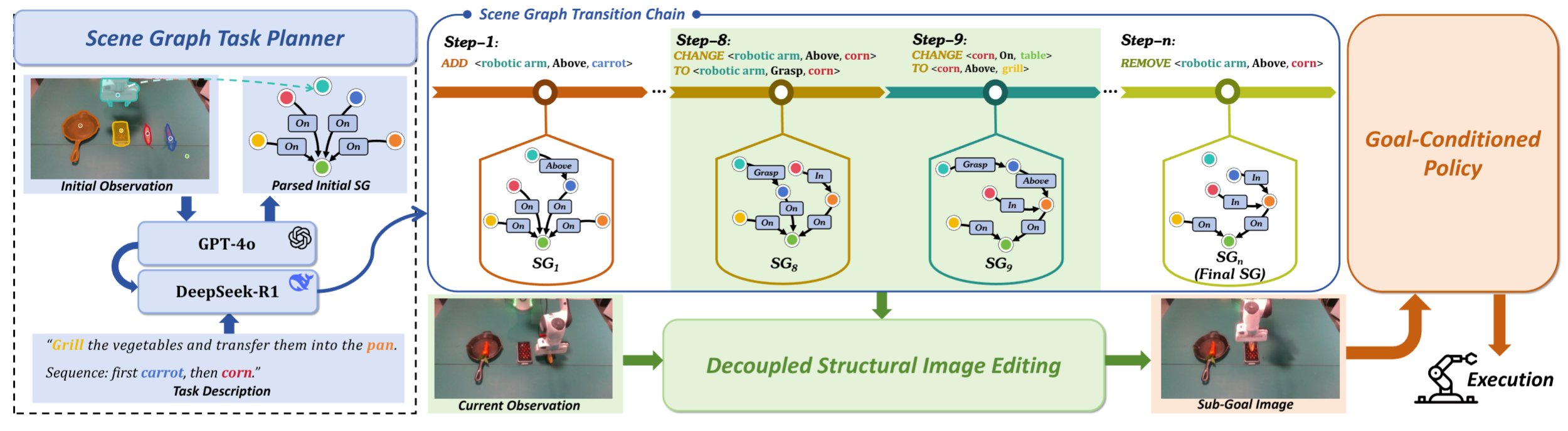
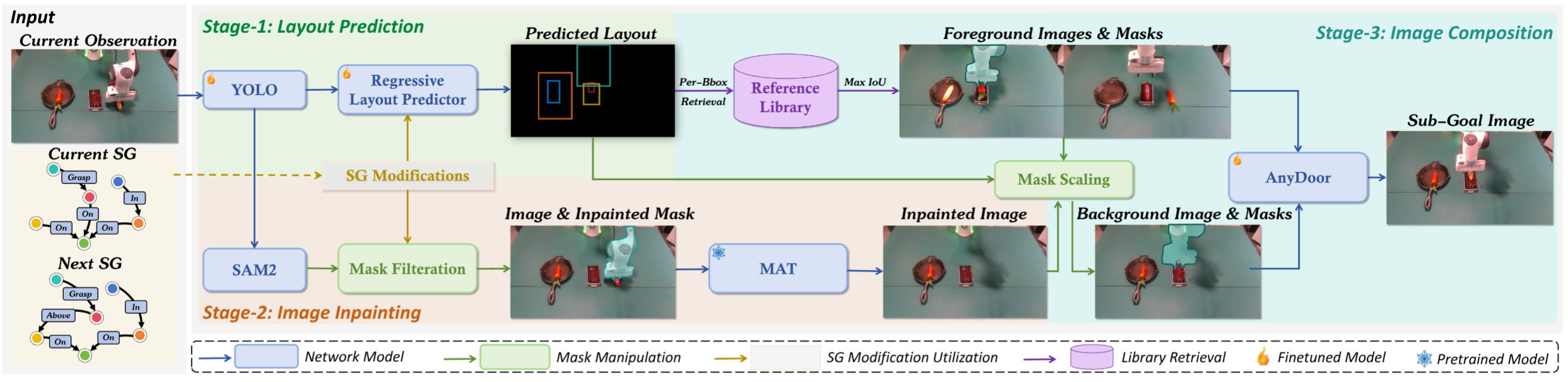
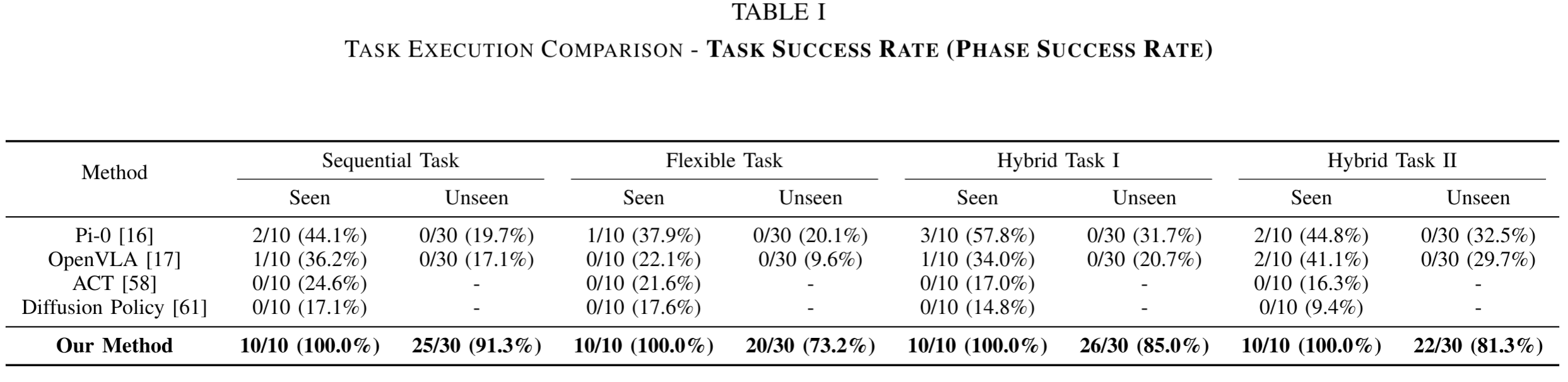
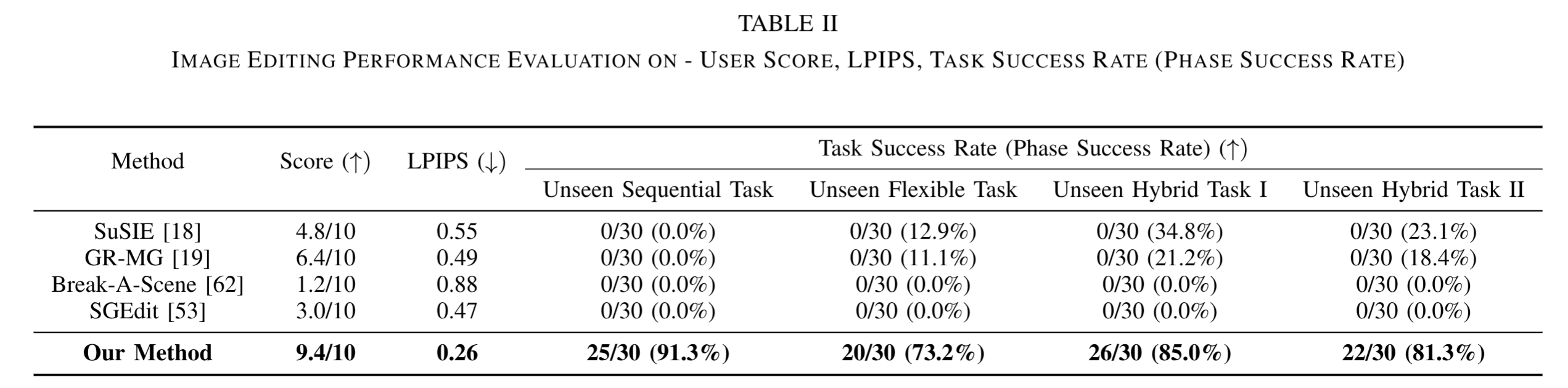
Successfully solving long-horizon manipulation tasks remains a fundamental challenge. These tasks involve extended action sequences and complex object interactions, presenting a critical gap between high-level symbolic planning and low-level continuous control. To bridge this gap, two essential capabilities are required: robust long-horizon task planning and effective goal-conditioned manipulation. Existing task planning methods, including traditional and LLM-based approaches, often exhibit limited generalization or sparse semantic reasoning. Meanwhile, image-conditioned control methods struggle to adapt to unseen tasks. To tackle these problems, we propose SAGE, a novel framework for Scene Graph-Aware Guidance and Execution in Long-Horizon Manipulation Tasks. SAGE utilizes semantic scene graphs as a structural representation for scene states. A structural scene graph enables bridging task-level semantic reasoning and pixel-level visuo-motor control. This also facilitates the controllable synthesis of accurate, novel sub-goal images. SAGE consists of two key components: (1) a scene graph-based task planner that uses VLMs and LLMs to parse the environment and reason about physically-grounded scene state transition sequences, and (2) a decoupled structural image editing pipeline that controllably converts each target sub-goal graph into a corresponding image through image inpainting and composition. Extensive experiments have demonstrated that SAGE achieves state-of-the-art performance on distinct long-horizon tasks.
Method
Experiments
Demo
More Visualization
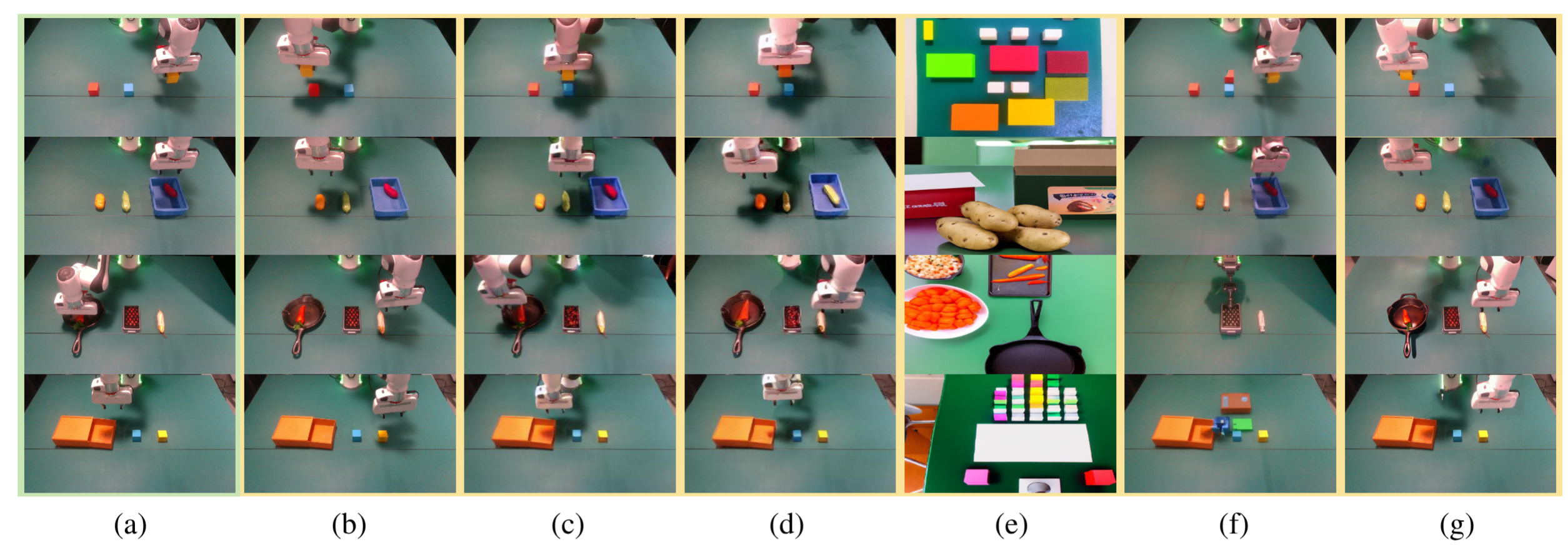
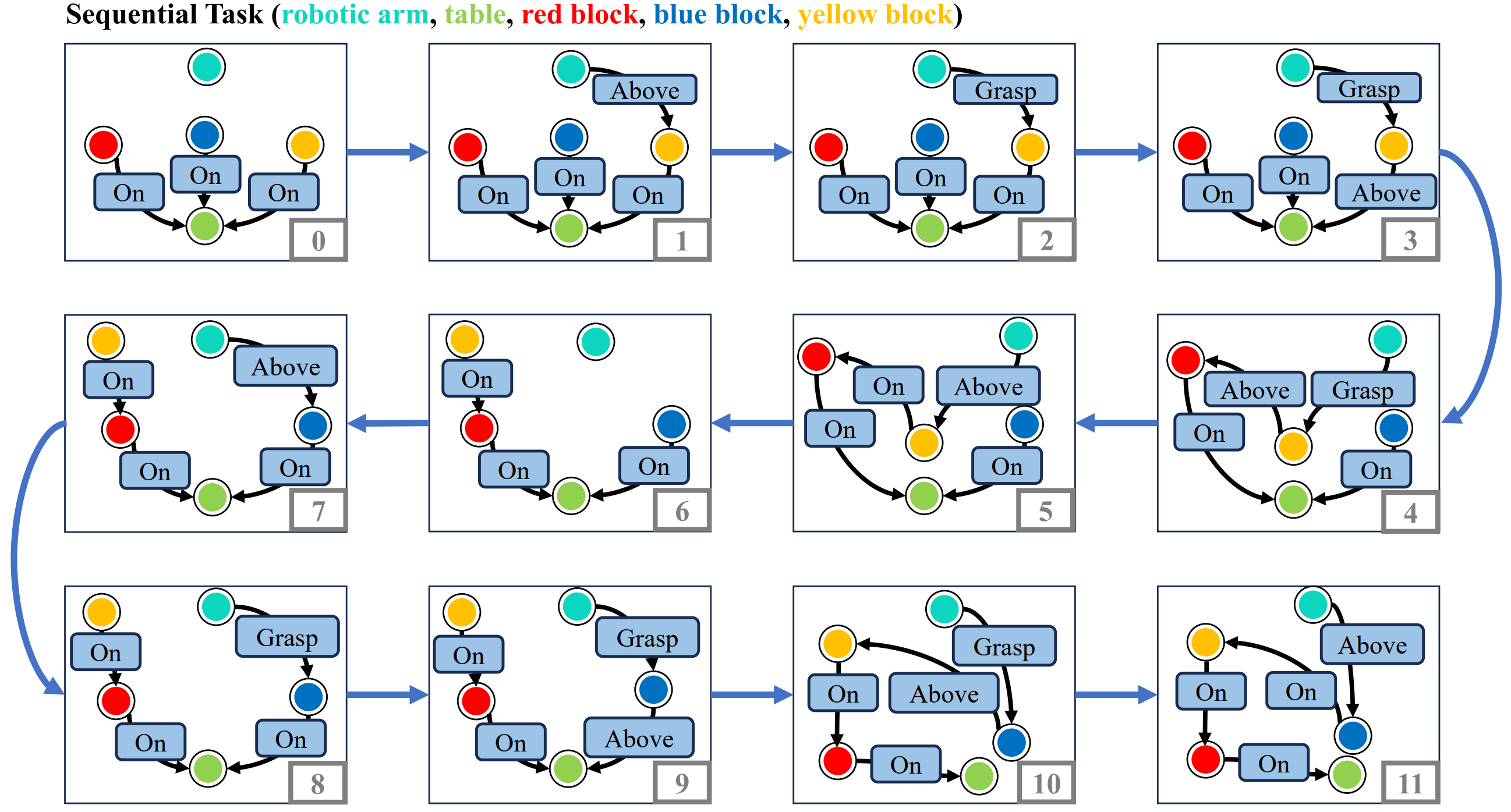
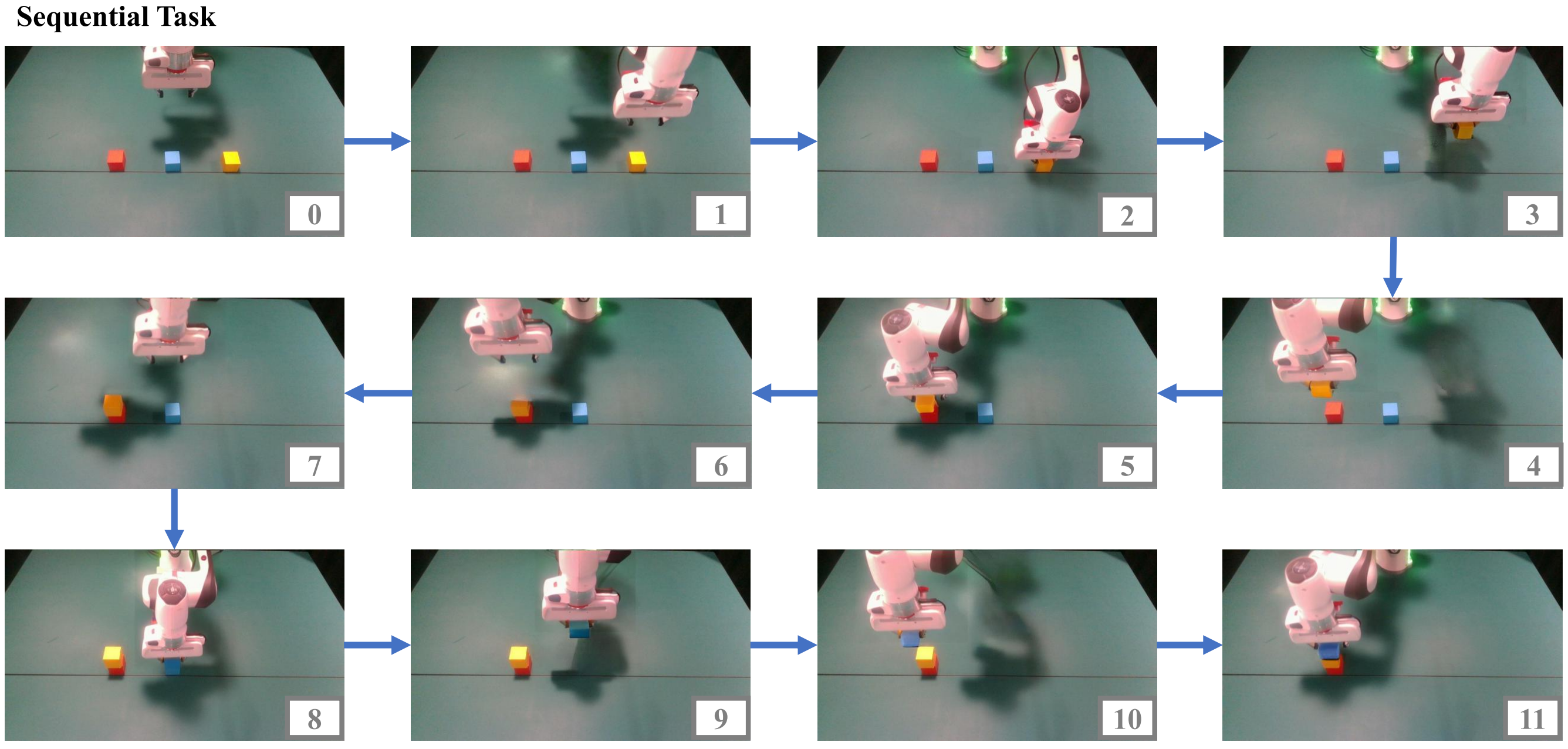
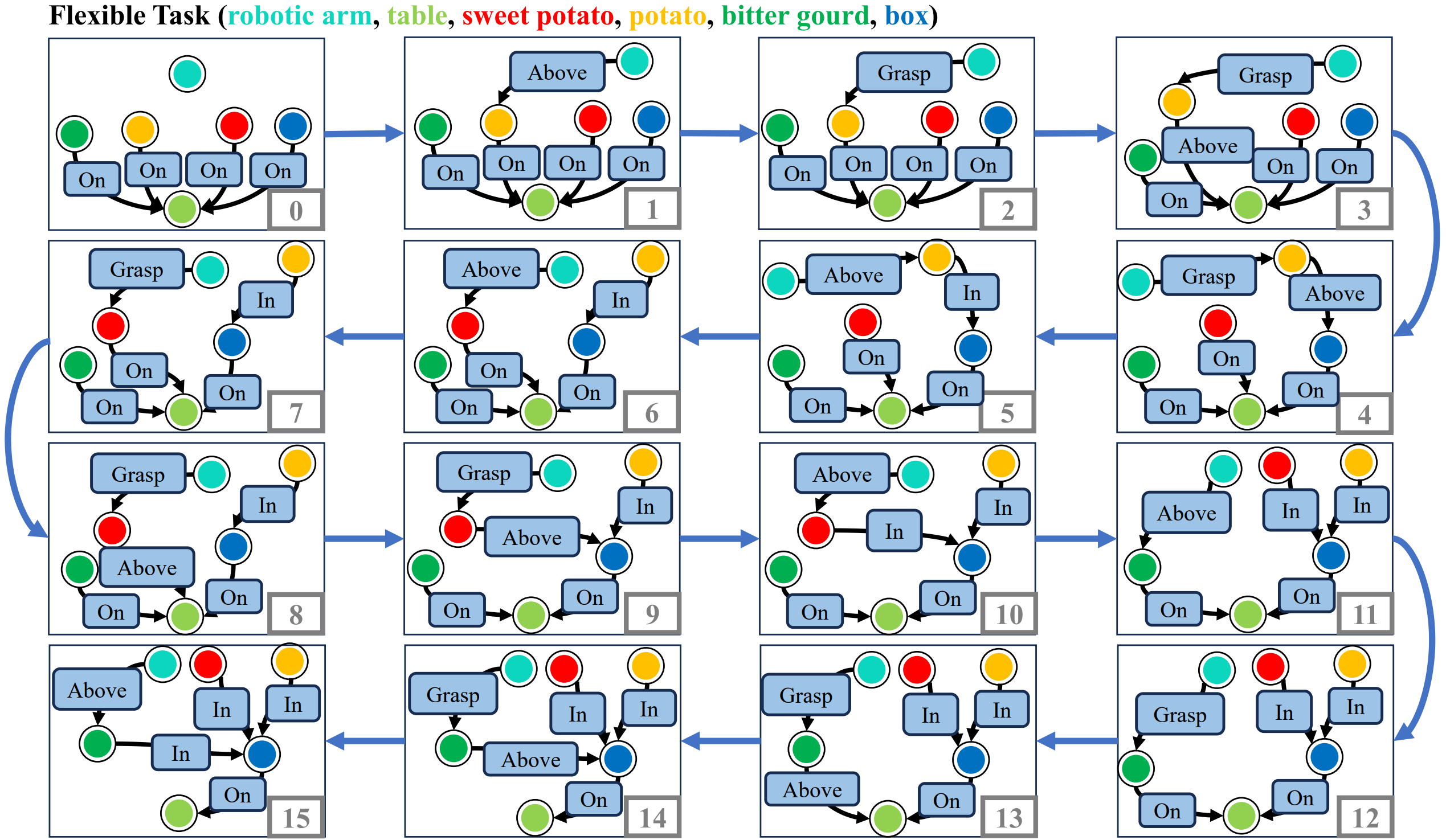
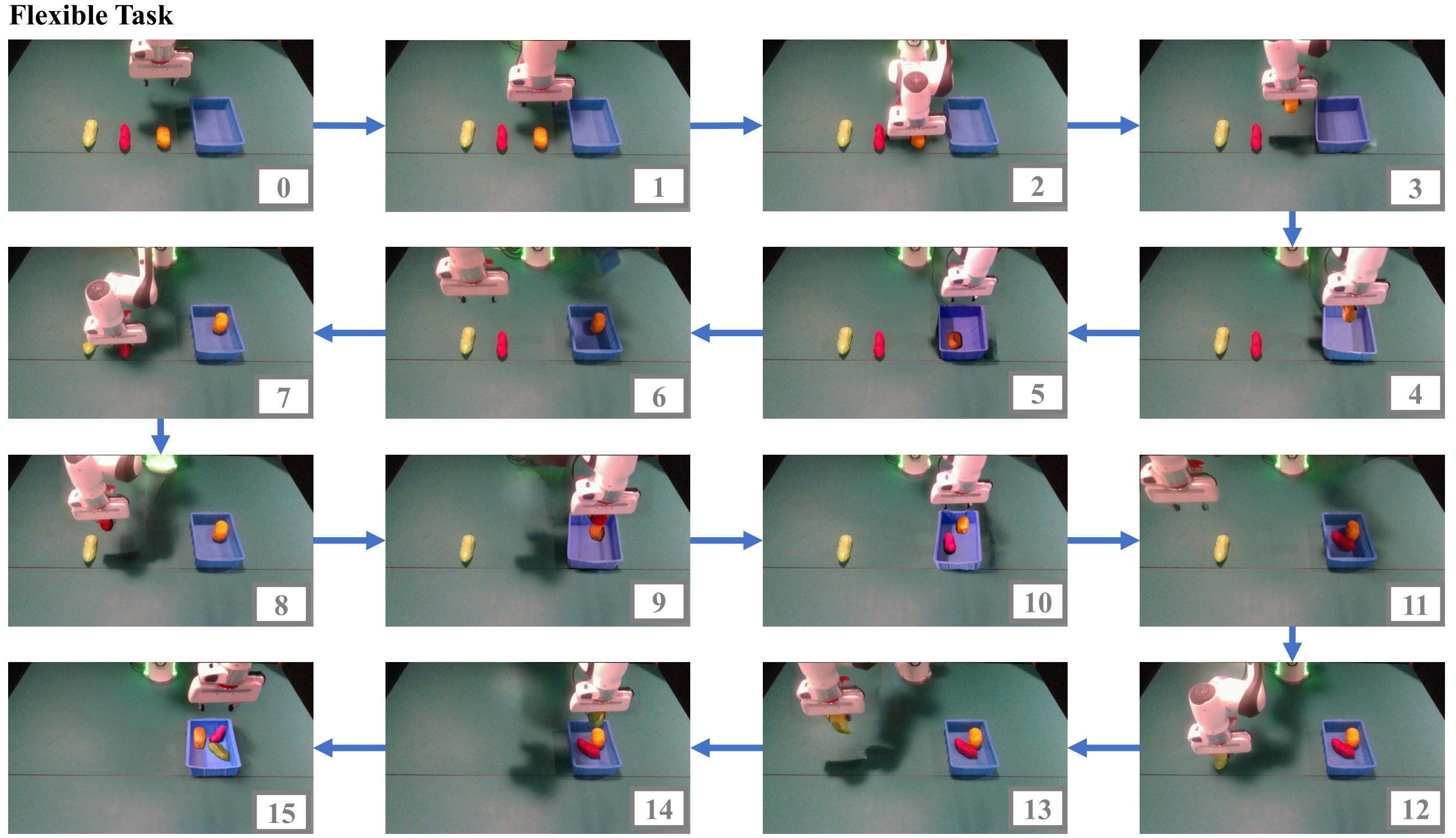
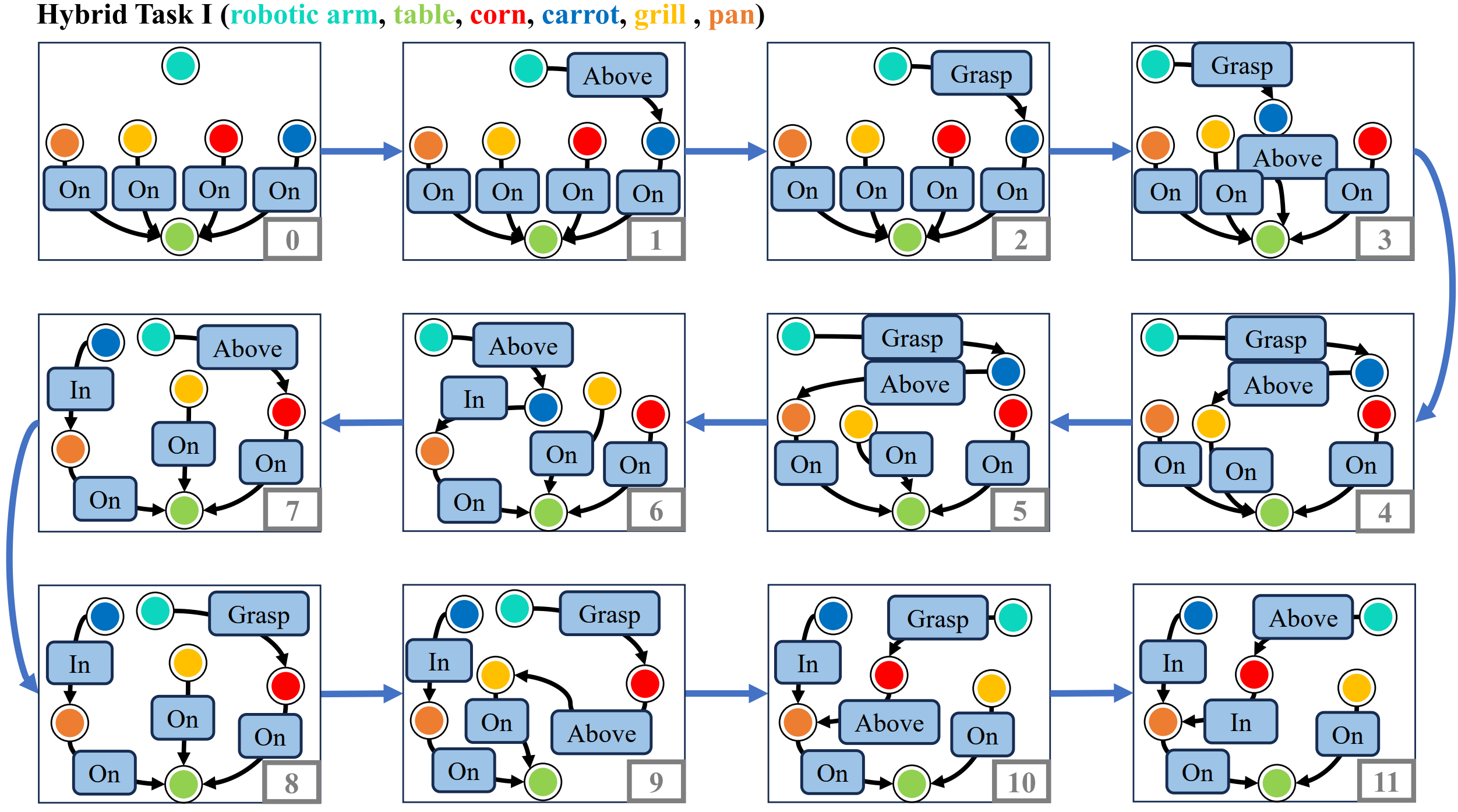
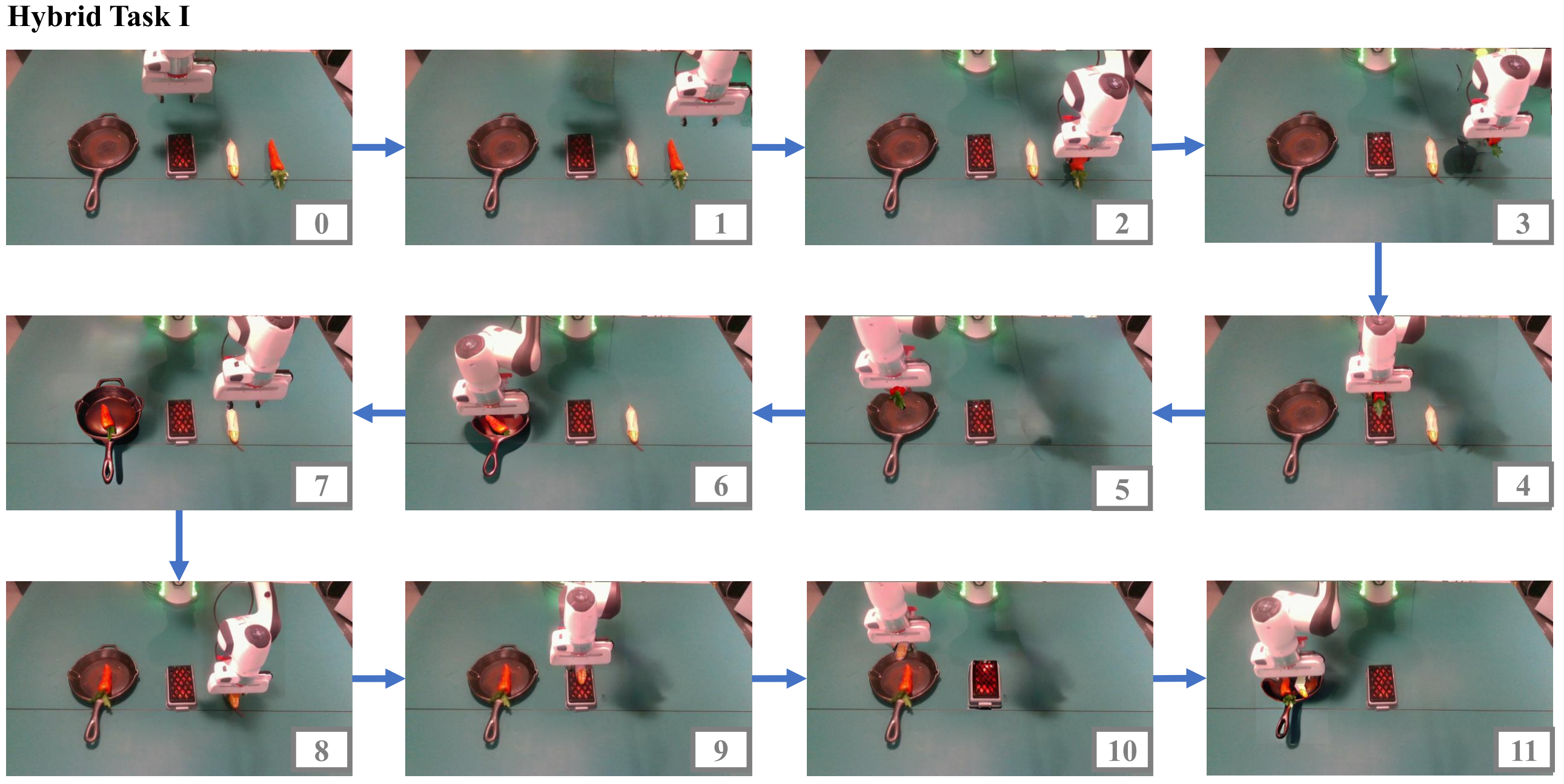
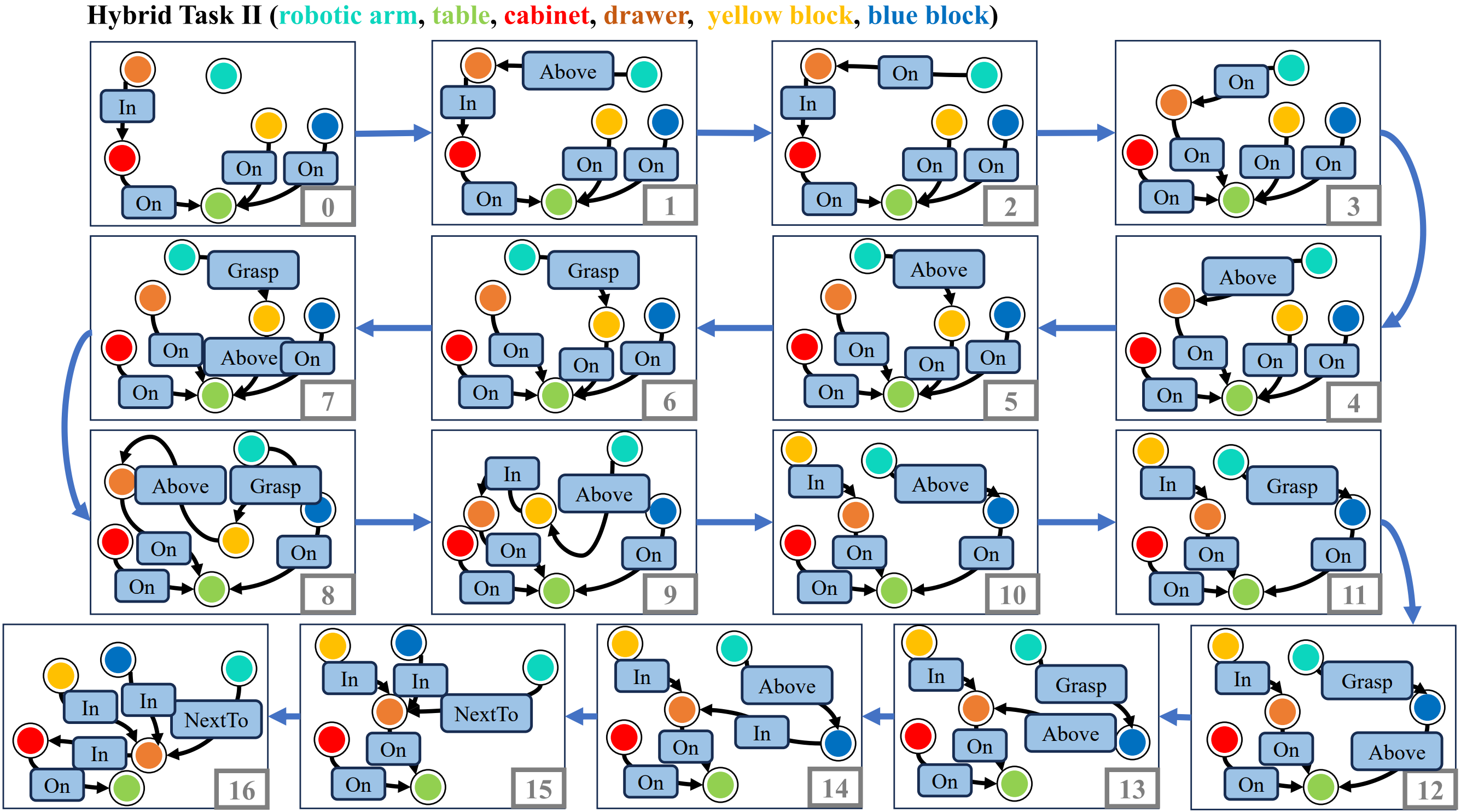
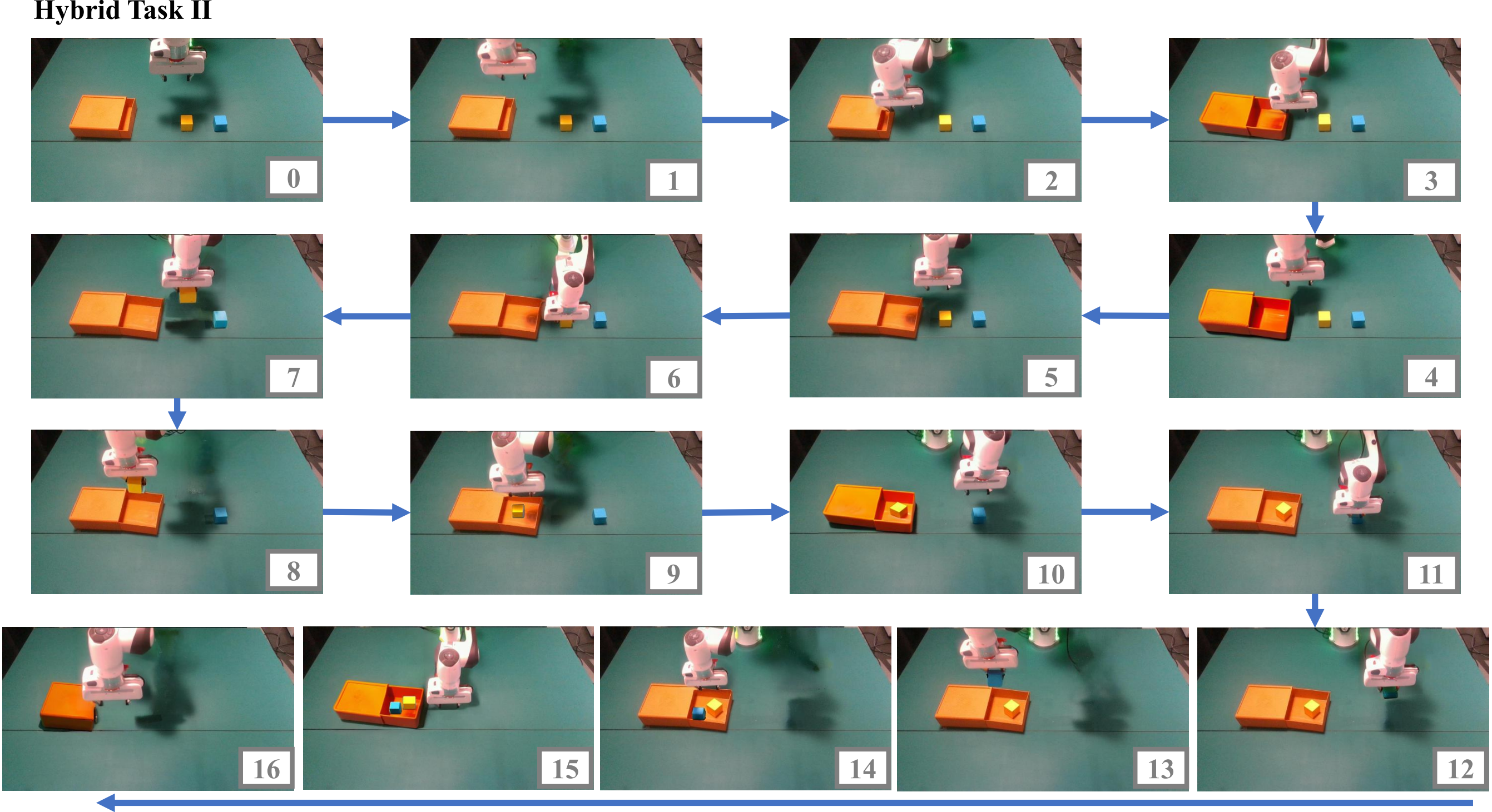
We offer examples of generated scene graph transition chains and the corresponding edited sub-goal images.
BibTeX
@misc{li2025sagescenegraphawareguidance,
      title={SAGE: Scene Graph-Aware Guidance and Execution for Long-Horizon Manipulation Tasks},
      author={Jialiang Li and Wenzheng Wu and Gaojing Zhang and Yifan Han and Wenzhao Lian},
      year={2025},
      eprint={2509.21928},
      archivePrefix={arXiv},
      primaryClass={cs.RO},
      url={https://arxiv.org/abs/2509.21928},
}